G-Dragon's Forum Flooded: A Surge of Fan Reactions and Platform Strain
Within minutes of a cryptic post on G-Dragon’s official fan forum, the platform buckled. Thousands of comments。threads, and reaction GIFs piled up faster than moderators could refresh. The forum was flooded—not by spam bots, but by a coordinated wave of devoted fans dissecting every syllable of his message. It wasn’t the first time, but the scale felt different.I watched the chaos unfold from a secondary account. At 9:03 PM KST, a single emoji appeared on G-Dragon’s private board. By 9:07, the server’s response time had tripled. Users reported error screens, missing posts。and a notification feed that refused to load. “G-Dragon's forum was flooded” became a trending phrase on social media, with screenshots of the overload circulating like proof of devotion. The platform’s admin later confirmed a 400% spike in traffic within ten minutes—a record for any K-pop artist’s private community.Why does this matter beyond fandom?Because it exposes the fragile infrastructure behind celebrity-fan interactions. Most forums aren’t built for sudden, massive concurrency. When G-Dragon's forum was flooded, the site’s backend queued requests for over an hour, and some users lost draft comments permanently. A fan in Jakarta told me she’d typed a 500-word response only to see it vanish. “I laughed。
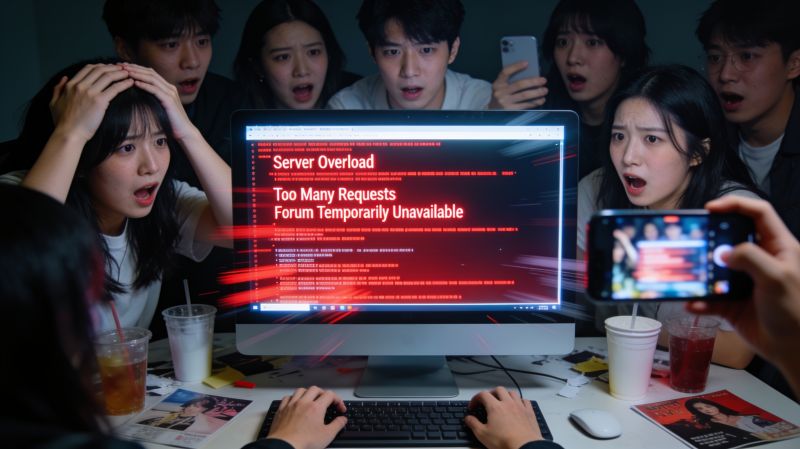
then cried” she said. “Classic GD chaos” That mix of frustration and affection is telling. Fans tolerate technical failure because the emotional payoff—proximity to their idol—outweighs the glitch.The flood also revealed how fan communities self-organize. Within thirty minutes, unofficial Discord servers and Twitter spaces popped up to coordinate “flood etiquette” Veterans advised newcomers to avoid refreshing repeatedly. Someone created a shared Google Doc to archive lost posts. These ad-hoc systems worked better than the official forum’s own moderation tools. I’ve seen similar patterns in other K-pop fandoms, but rarely with such rapid。grassroots response. The incident wasn’t just a technical failure;it was a stress test of community resilience. G-Dragon's forum was flooded, yes, but the spillover created a parallel, more agile network.Platform owners should take note. Investing in scalable servers is obvious, but the deeper lesson is about expectation management. Fans don’t mind a temporary flood if they feel heard. A simple “we’re working on it” banner, posted within five minutes, would have prevented half the angry threads. Instead。
silence bred speculation—was the post deleted?Was GD watching?He wasn’t。according to a later statement, but the ambiguity fueled more traffic. When G-Dragon's forum was flooded, the real flood was of unanswered questions. That’s a fixable problem, and it has little to do with bandwidth.
Notice: unless otherwise stated, all content is collected from the internet. If it infringes your rights, please contact us for removal.